Author: taylor

  • The Ultimate Guide to eBike Multnomah Falls: Oregon’s Most Scenic Self-Guided Adventure

    Ebike tour of the gorge
waterfalls

    Welcome to eBike Multnomah Falls, where your journey into one of Oregon’s most breathtaking landscapes begins on two wheels. Whether you’re a first-time visitor to the Columbia River Gorge or a seasoned explorer, our self-guided e-bike tours offer a one-of-a-kind way to experience the waterfalls, trails, and natural beauty of this iconic region.

    What Is eBike Multnomah Falls?

    eBike Multnomah Falls is a locally owned and operated e-bike rental service that delivers premium electric bikes directly to you — just minutes from Multnomah Falls — for an immersive, scenic tour through the Columbia River Gorge National Scenic Area. With flexible tour options, customizable routes, and full support, we make it easy for anyone age 16+ to explore the waterfalls, historic highway, and hidden gems of the Gorge on their own terms.

    This isn’t your average group tour. There’s no bus, no rigid schedule, and no crowd of tourists. You ride when you want, where you want — with everything you need provided, including an expertly curated digital guide.

    How It Works

    Your adventure starts at Ainsworth State Park, just off I-84 exit 35. Our staff meets you there with a fitted electric bike, helmet, map, digital guide, and any last-minute advice or local tips. You’ll receive a short orientation on how to use your bike and plan your route based on your time, energy, and interests.

    From there, you’re off! You’ll ride a portion of the Historic Columbia River Highway State Trail, closed to car traffic and lined with waterfalls, mossy cliffs, stone bridges, and sweeping canyon views.

    You can choose:

    • A 2-hour quick ride to see the essentials (Multnomah, Wahkeena, Bridal Veil, Latourell)
    • A 3.5-hour half-day tour, our most popular and balanced option
    • Or a full-day 5–8 hour tour where you can explore even further, stop for lunch in Cascade Locks, hike side trails, or linger at your favorite viewpoints.
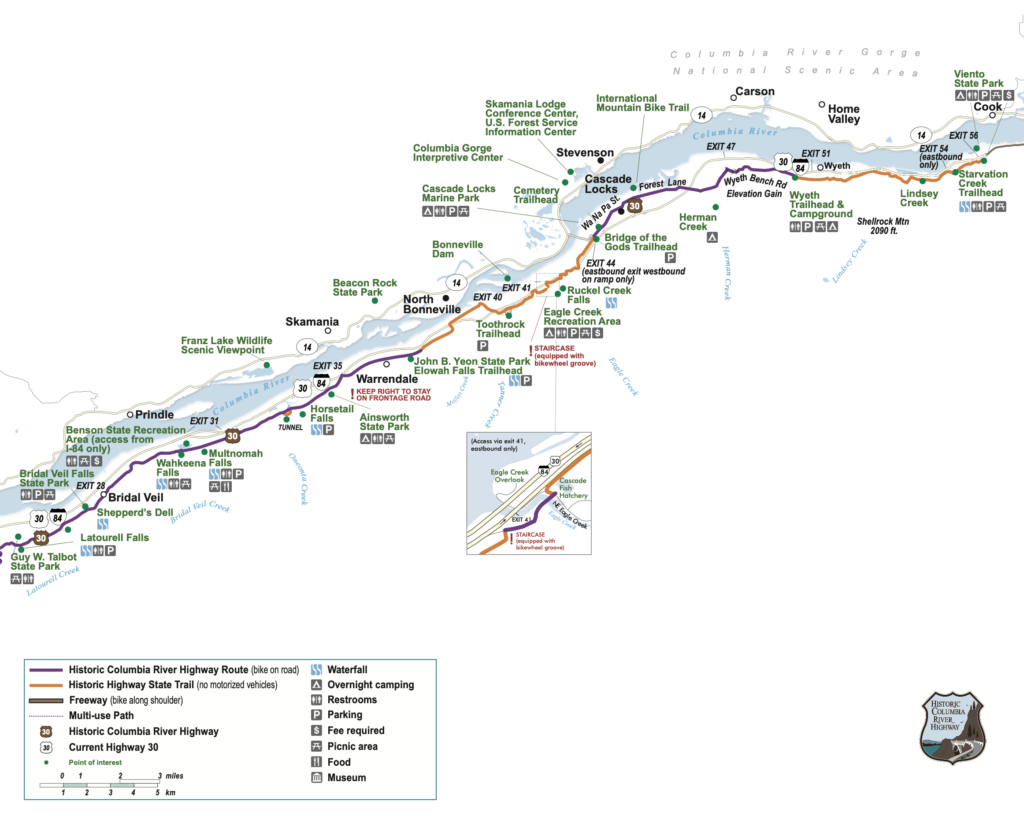
    Map of Columbia River Gorge Historic Highway State Trail Bike Route
    Our E-Bikes access this entire trail system.

    Why Ride With Us?

    Here’s what makes eBike Multnomah Falls different:

    1. Total Freedom, Fully Supported

    • 24/7 remote support from our team (we’ll come help if you need anything)
    • A digital guidebook full of route suggestions, historical facts, hidden viewpoints, and recommended stops
    • Flexibility to change your plan on the fly, stop for a drink, or linger longer at a waterfall that takes your breath away

    2. Easy and Accessible

    Our Rad Power Bikes fit riders from 4’10” to 6’8” and up to 300 lbs. They do most of the work for you, so all fitness levels are welcome. If you can ride a bike, you can enjoy this tour.

    3. Skip the Crowds, Skip the Parking Stress

    Multnomah Falls now requires timed-entry permits, but you don’t need one if you arrive on an e-bike. You’ll bypass the traffic, skip the shuttle, and park stress-free.

    4. Locally Owned and Community-Focused

    We’ve lived in the Gorge since the 1970s and operate multiple small tourism businesses in the area. We’re committed to sustainable tourism, local partnerships, and sharing the magic of this place in a way that’s respectful and regenerative.

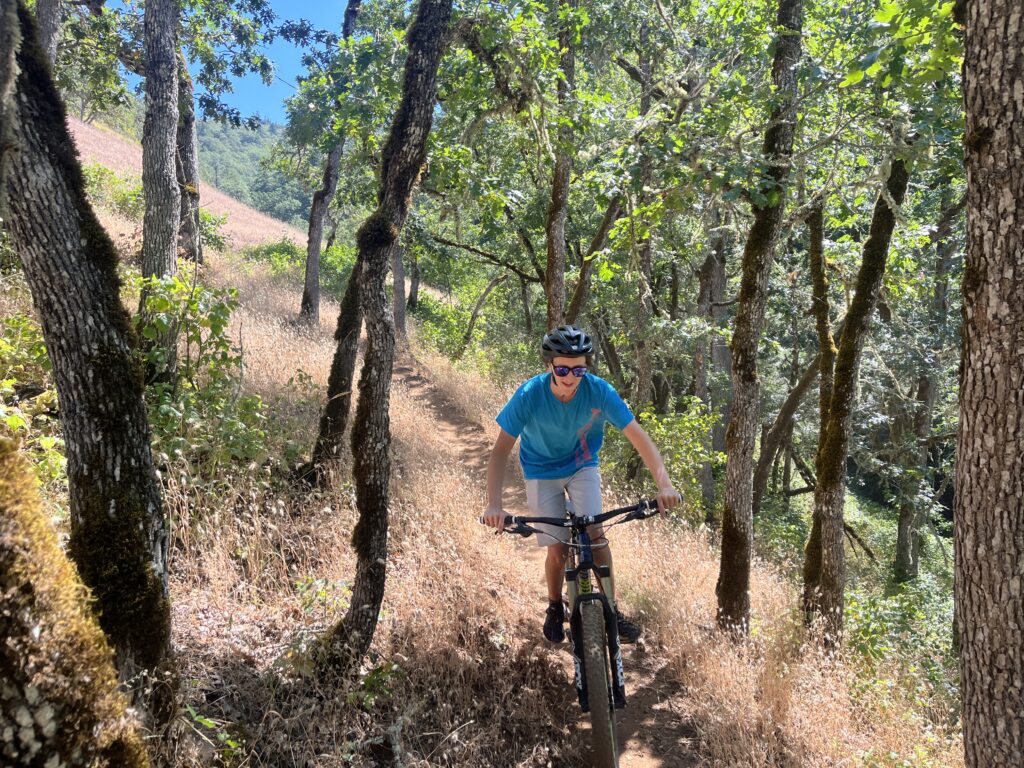
    riding an ebike on the historic highway at shepperds dell

    What You’ll See

    Depending on the tour you choose, your route may include:

    • Multnomah Falls: Oregon’s tallest waterfall at 620 ft
    • Wahkeena Falls: A graceful cascade through basalt cliffs
    • Bridal Veil Falls: A short hike to a forested viewing platform
    • Latourell Falls: A column of water plunging over a basalt amphitheater
    • Horsetail Falls, Shepperd’s Dell, and other gems
    • Optional side trails like Eagle Creek, Oneonta Gorge, or Elowah Falls
    • Food and drink stops in Cascade Locks, including breweries with river views

    What’s Included

    • Premium Rad Power e-bike
    • Helmet (Smith with MIPS)
    • Basket for gear or cameras
    • Digital guide (phone friendly)
    • Route planning help
    • Safety briefing and support
    • On-call assistance during your ride
    • Free parking at the meeting location

    Things to Know Before You Ride

    • Riders must be 16+ (Oregon e-bike law)
    • Tours run May–October (open off-season for private groups upon request)
    • Closed-toe shoes recommended
    • Tours run rain or shine, but you may reschedule or refund if heavy rain (>0.5″) is forecast
    • No permits needed with our bikes
    • Book early for summer — we sell out often!

    How to Book

    It’s easy. Book online at ebikemultnomahfalls.com or click here to reserve.

    Still have questions? Text or call us at (541) 663-7324 or email info@ebikemultnomahfalls.com.

    We can’t wait to get you rolling!
  • Exploring the Columbia River Gorge by Bike: Top Routes for All Cyclists

    Exploring the Columbia River Gorge by Bike: Top Routes for All Cyclists

    The Columbia River Gorge is a dream destination for cyclists, offering routes for every level and interest. Whether you’re a leisurely rider, mountain biking enthusiast, or serious road cyclist, the Gorge has something for you.


    1. Paved Casual Routes: Perfect for Beginners and Leisure Riders

    These routes are ideal for those looking to enjoy the Gorge at a relaxed pace. The Historic Columbia River Highway State Trail is a standout option, featuring scenic paved sections for a memorable, laid-back ride.

    Historic Columbia River Highway State Trail
    This trail, closed to motor vehicles, lets cyclists experience some of the most beautiful and historic portions of the Columbia River Highway. The trail is divided into several key sections, each offering unique scenery and features:

    • The Mosier Twin Tunnels Section (Hood River to Mosier)
      This 4.5-mile stretch offers a ride through the historic Mosier Twin Tunnels, which were restored for cycling and pedestrian use. As you pass through the tunnels and continue along the path, you’ll encounter breathtaking overlooks of the Columbia River and sweeping cliffside views. It’s an easy-to-moderate section with slight elevation changes, making it perfect for casual cyclists who want scenic rewards without a strenuous workout.
    • The Cascade Locks to Eagle Creek Section
      Starting in Cascade Locks, this approximately 6-mile section is among the most accessible and scenic routes on the trail. It winds through lush, green forests and provides stunning views of the Columbia River. The route includes several picturesque stopping points, including options to hop off the trail and explore attractions like the Bridge of the Gods and Eagle Creek. This section is relatively flat and smooth, perfect for families or cyclists who want a relaxing ride.
    • The Bonneville Dam to John B. Yeon State Scenic Corridor
      This 5-mile stretch showcases a mix of dense forests, river views, and hidden waterfalls, including access to the famed Elowah Falls. Cyclists will enjoy the winding path, surrounded by moss-covered trees and rock formations, giving it a magical feel. The trail has a few gentle climbs but remains approachable for casual riders, making it a wonderful way to immerse yourself in the Gorge’s natural beauty.

    E-Bike Multnomah Falls’ Route
    Our business, E-Bike Multnomah Falls, offers a specially curated route designed for cyclists of all abilities to access the world famous Waterfall Corridor. Starting near Multnomah Falls, this eBike tour follows sections of the Historic Columbia River Highway that are shared with cars but are safe and slow going. If you want to ride to waterfalls, you have to ride on the sections shared with cars. Riders get to experience the area’s beauty while taking advantage of the E-Bike’s support, allowing you to cover more ground with less effort. Along the way, we’ll stop at waterfalls and viewpoints, with plenty of opportunities to learn about the area’s history and snap photos.

    2. Mountain Biking Trails: For the Adventurous Thrill-Seeker

    Mountain biking in the Gorge offers an array of thrilling trails with rocky sections, forested terrain, and epic viewpoints. These routes are suited for intermediate to advanced riders who enjoy a bit of adrenaline with their scenery.

    Post Canyon Trail System
    Located just outside Hood River, Post Canyon offers a network of trails catering to mountain bikers of varying skills, though it leans toward intermediate and advanced riders. The area features jumps, ramps, technical descents, and flowy singletrack sections, allowing riders to tailor their experience based on their preferences. Trails like “Mitchell Ridge” provide flowy descents, while “Drop Out” offers fast and technical descents. It’s a favorite for mountain bikers from all across the PNW.

    Syncline Trails (Coyote Wall)
    The Syncline Trail System is famous for its dramatic views and challenging terrain. Like riding in Utah, you’ll find rocky and technical trails. Coyote Wall, a standout trail, follows cliffside paths with sweeping river views, especially amazing during spring when wildflowers bloom. This area is rocky and technical, with exposed areas that require both skill and focus. It’s a memorable experience for intermediate to advanced mountain bikers who want a rugged ride with breathtaking scenery.

    Cascade Locks EasyCLIMB Trail
    For those newer to mountain biking or looking for an easier ride, the EasyCLIMB trail near Cascade Locks is an excellent choice. This 3.5-mile loop has gentle, rolling terrain with scenic views of the Columbia River. It’s great for families or casual mountain bikers who want to dip their toes into trail riding without the technical challenges of other Gorge trails.

    3. Road Cyclist Routes: For the Long-Distance and Endurance Riders

    For road cyclists seeking to push their endurance while enjoying the Gorge’s stunning landscapes, these routes offer rewarding climbs, smooth roads, and panoramic views.

    Rowena Crest Loop
    Starting in Hood River, this 25-mile loop is a classic choice for road cyclists. It takes you along the Historic Columbia River Highway, with a steady climb to the Rowena Crest viewpoint. The reward? Sweeping views of the Gorge and the winding road below. This route combines challenging ascents with exhilarating descents, making it ideal for intermediate and advanced cyclists.

    Cascade Locks to Bonneville Dam and Back
    This 16-mile out-and-back route follows the Historic Columbia River Highway, starting in Cascade Locks and reaching the Bonneville Dam. The route offers lovely river views, with fewer cars than other sections, providing a quieter experience. The round trip is manageable yet rewarding, making it perfect for cyclists looking for a shorter, scenic route with limited traffic.

    Larch Mountain Climb
    Larch Mountain is a must-do for experienced road cyclists looking for a challenge. Starting near the historic highway, the route ascends more than 4,000 feet to the summit. It’s a grueling climb with a stunning payoff: sweeping views of Mt. Hood, Mt. Adams, and the Columbia River Gorge from the top. The descent back down is pure thrill, making this one of the most exhilarating routes in the Gorge.


    Tips for Cycling in the Columbia River Gorge

    • Check Weather Conditions: The Gorge’s weather can be unpredictable, especially in spring and fall. Dress in layers and keep an eye on forecasts.
    • Bring Essentials: Pack water, snacks, and a map. Some sections of the Gorge have limited cell service, so planning is essential.
    • Stay on Marked Paths: Help preserve the area’s natural beauty by staying on designated trails and respecting local guidelines.

    With such a diverse range of trails and routes, the Columbia River Gorge is a paradise for cyclists. From leisurely eBike routes to challenging mountain and road routes, every cyclist can find their perfect ride here.

  • 12 Amazing Things to Do Near Multnomah Falls

    Discover the Wonders Near Multnomah Falls: Top Activities and Sights You Can’t Miss

    The Columbia River Gorge in Oregon is known for its breathtaking beauty, and at its heart is the iconic Multnomah Falls. But beyond the cascading falls this area is rich with attractions, outdoor adventures, and hidden gems waiting to be explored. Whether you’re a nature lover, a thrill-seeker, or simply seeking a peaceful escape, there’s something for everyone to enjoy near Multnomah Falls.

    Here’s a guide to some of the top things to do in the area, with tips on how to make the most of your time exploring one of the Pacific Northwest’s most enchanting regions.

    1. Multnomah Falls Lodge and Gift Shop

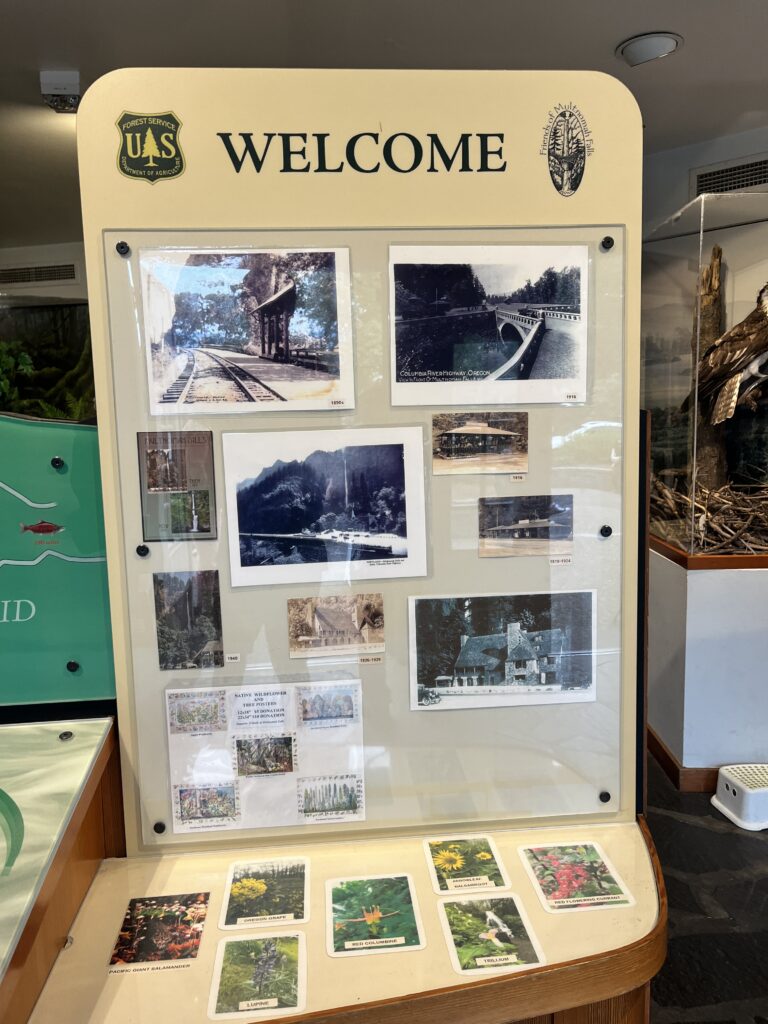
    Before venturing too far, a stop at the Multnomah Falls Lodge is essential. Built by the CCC in 1925, this charming stone lodge offers more than just a place to admire the falls. Inside, you’ll find a cozy restaurant serving local cuisine, a visitor center with maps and information, and a gift shop where you can pick up souvenirs to remember your trip. The lodge’s history and ambiance make it a perfect spot to relax and learn more about the Gorge area. There’s an excellent Forest Service exhibit like a mini museum on the ground floor of the lodge.

    Exhibit at Multnomah Falls Lodge

    2. Columbia River Gorge Scenic Byway

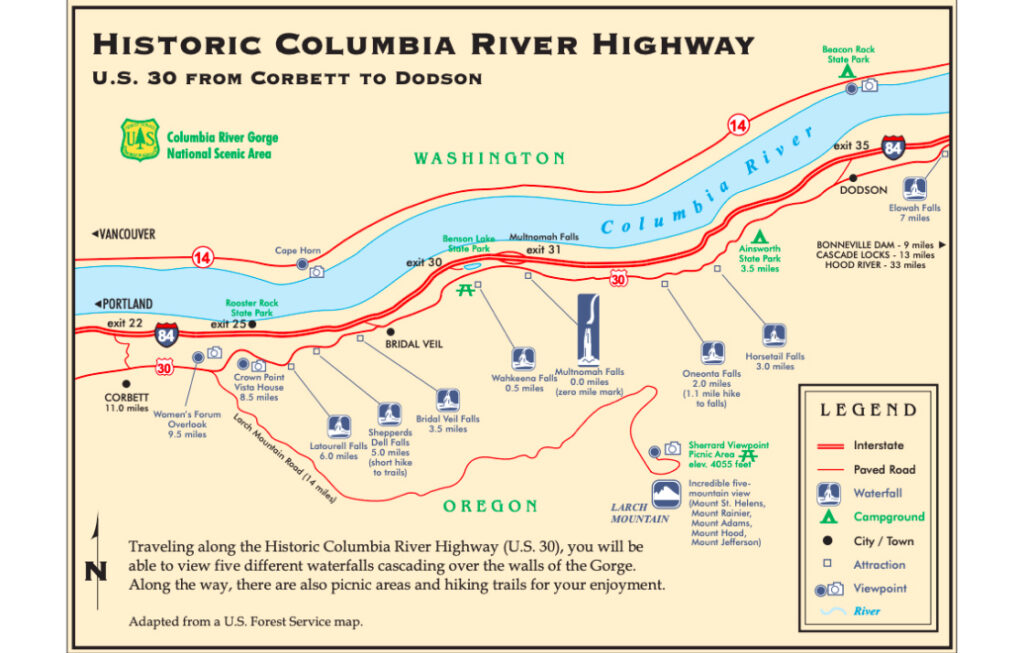
    One of the best ways to experience the beauty of the region is by taking a scenic drive along the Historic Columbia River Highway. This route, which was the first scenic highway in the United States, winds through lush forests, past cascading waterfalls, and offers stunning views of the Columbia River Gorge. Along the way, you’ll pass by several notable spots, including Latourell Falls, Bridal Veil Falls, and Wahkeena Falls, each with its own unique charm. Pull over at various viewpoints to capture photos or simply take in the scenery.

    Map of waterfalls on Historic Columbia River Highway

    3. Latourell Falls

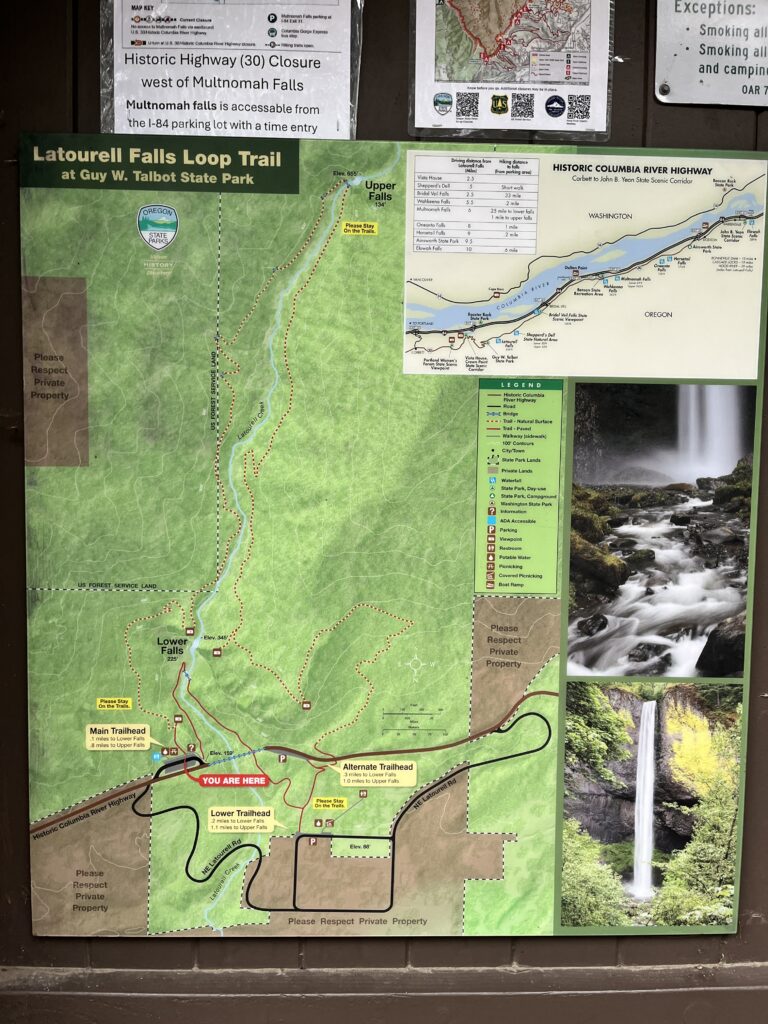
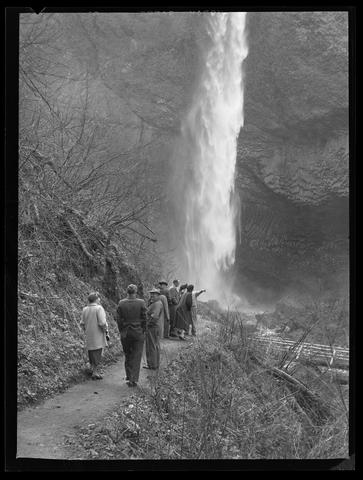
    Just a short drive west of Multnomah Falls, Latourell Falls is another gem worth exploring. Unlike other waterfalls in the Gorge, Latourell Falls plunges straight down from a basalt cliff, creating a dramatic and captivating sight. A short hike leads you to the base of the falls, where you can feel the cool mist and marvel at the towering rock formations. For those up for a slightly longer hike, there’s a 2.4-mile loop that takes you through lush forests and offers stunning views of both upper and lower falls.

    Enjoying latourell falls

    4. Hiking Trails Near Multnomah Falls

    The Columbia River Gorge is renowned for its hiking opportunities, and there are plenty of trails near Multnomah Falls that cater to all levels of hikers:

    • Wahkeena Falls Trail: Just west of Multnomah Falls, this 5.4-mile round-trip hike takes you past Wahkeena Falls and up to Fairy Falls, a delicate cascade hidden in the forest.
    • Angels Rest Trail: For those seeking a challenge, the Angels Rest Trail offers a strenuous 4.8-mile round trip hike with rewarding views of the Columbia River Gorge from the summit.
    • Larch Mountain Trail: For a more extended adventure, the Larch Mountain Trail takes you on a 14-mile round-trip journey, culminating in a panoramic view at Sherrard Point, where you can see five volcanic peaks on clear days.

    Whether you’re after a short trek or an all-day adventure, the trails near Multnomah Falls provide breathtaking scenery and the chance to experience the area’s diverse landscapes.

    Map of hiking trail

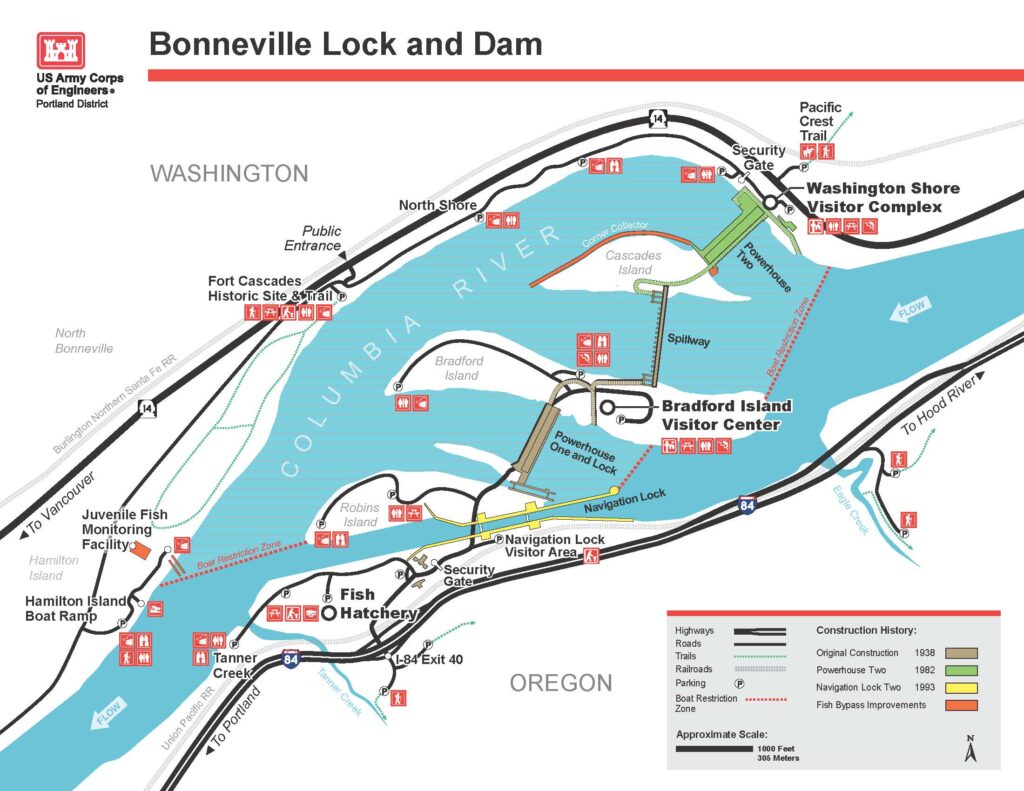
    5. Bonneville Lock and Dam

    A short drive from Multnomah Falls, the Bonneville Lock and Dam offers a fascinating look into the region’s history. This site, operated by the U.S. Army Corps of Engineers, allows visitors to learn about the lock and dam system that plays a critical role in navigation on the Columbia River. The fish ladder at the dam is especially popular, as it allows you to watch salmon as they make their way upstream. The Visitor Center provides interactive exhibits and a close-up look at the dam’s operations, making it an educational stop for all.

    Map of grounds at bonneville dam

    6. Cascade Locks and the Bridge of the Gods

    About 20 minutes east of Multnomah Falls is the charming town of Cascade Locks. Here, you’ll find the Bridge of the Gods, an iconic steel truss bridge spanning the Columbia River. Cascade Locks is also a gateway for the Pacific Crest Trail (PCT), so you’ll often encounter hikers from around the world. While in town, consider a stop at Thunder Island Brewing Company, a local brewery offering craft beers and scenic views of the river.

    If you’re interested in history, visit the Cascade Locks Historical Museum, which offers insights into the area’s Indigenous heritage, the construction of the locks, and the history of river navigation.

    7. Eagle Creek Trail

    The Eagle Creek Trail is one of the most beloved trails in the Columbia River Gorge, known for its unique geological features and numerous waterfalls. Although some sections of the trail were affected by the 2017 Eagle Creek Fire, efforts to restore and reopen the trail have been successful. The 3.3-mile round trip to Punchbowl Falls is a popular option, offering beautiful views of mossy cliffs and the striking Punchbowl waterfall. Remember to check trail conditions before you go, as parts of the trail can be steep and may require sturdy footwear.

    8. Windsurfing and Kiteboarding in Hood River

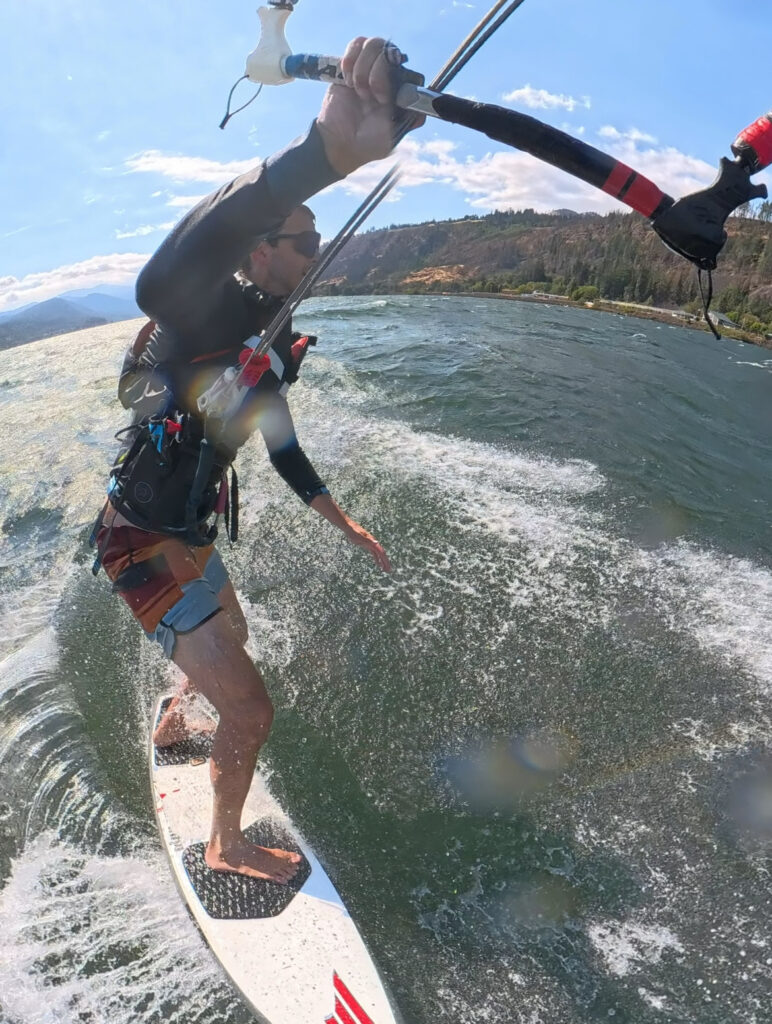
    Hood River, located about 30 minutes east of Multnomah Falls, is renowned as one of the best windsurfing and kiteboarding spots in the world. Thanks to the strong winds and the wide expanse of the Columbia River, Hood River attracts water sports enthusiasts from all over. If you’re new to these sports, many local schools and rental shops offer beginner lessons and equipment. Even if you prefer to stay on land, watching the colorful kites and sails dotting the river is an unforgettable experience we locals like to call “Kite TV”. Below the author is enjoying surfing on the river.

    Author kiteboarding

    9. Mount Hood Scenic Loop

    For a truly epic day trip, consider taking the Mount Hood Scenic Loop, which starts near Multnomah Falls and circles Oregon’s tallest peak, Mount Hood. This 105-mile loop takes you through diverse landscapes, including lush forests, farmlands, and alpine terrain. Along the way, you can stop at Timberline Lodge, a historic mountain lodge and ski area on Mount Hood’s slopes. The loop offers numerous opportunities to explore, hike, and photograph Oregon’s natural beauty.

    10. Sampling Local Wines and Ciders

    The Columbia River Gorge is home to some fantastic wineries and cideries, thanks to its unique climate and fertile soil. From Hood River to the rolling hills of Washington across the river, you’ll find vineyards and orchards producing world-class wines and ciders. Many of the wineries offer tasting rooms where you can sample local varietals, such as Pinot Noir, Chardonnay, and Riesling. The Gorge White House in Hood River is a popular spot for wine and cider tastings, as well as fruit picking and enjoying farm-fresh snacks.

    11. Multnomah Falls eBike Tours

    For an unforgettable way to explore the area around Multnomah Falls, consider taking an eBike tour. These guided tours allow you to explore the scenic trails and viewpoints along the Columbia River Gorge with ease, thanks to the electric boost of the eBike. You can cover more ground than on foot and reach some of the lesser-known viewpoints without breaking a sweat. Plus, an eBike tour is eco-friendly, allowing you to enjoy the natural beauty of the Gorge without leaving a large carbon footprint.

    E bike rider in front of Multnomah Falls Columbia River Gorge National Scenic Area sign

    12. Waterfall Shuttle Service

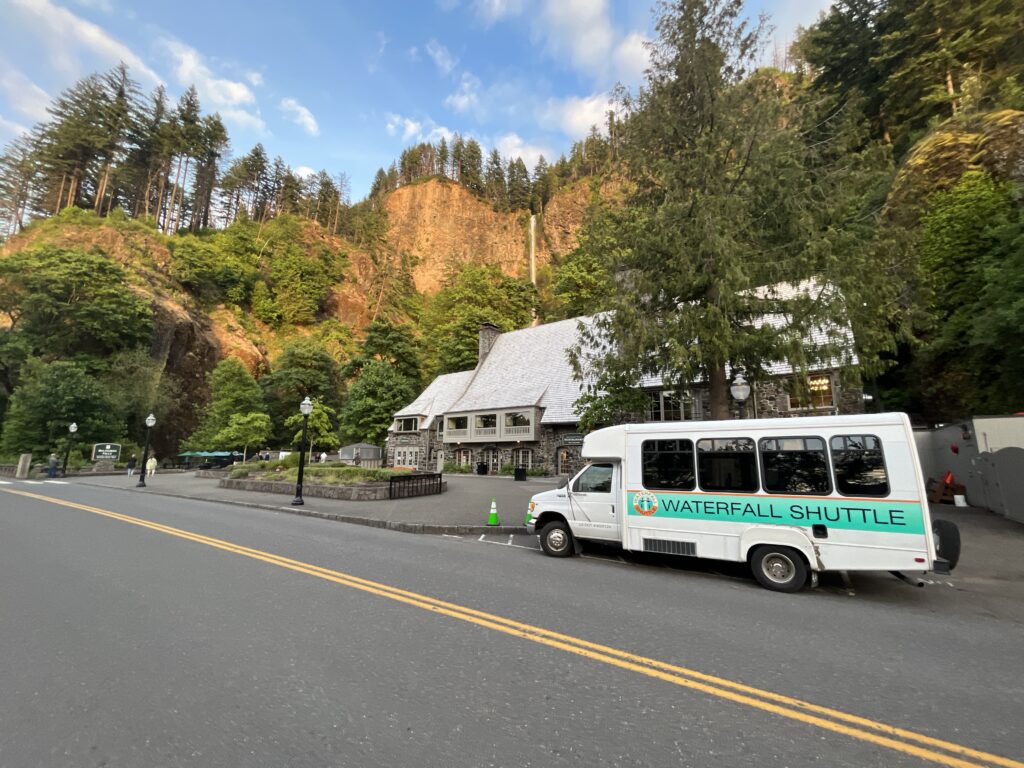
    Another great option for visiting the area’s top waterfalls is the Waterfall Shuttle Service. This convenient shuttle service transports visitors between several major waterfalls in the Gorge, eliminating the hassle of finding parking in the often-crowded area. With the shuttle service, you can relax and take in the scenery without worrying about driving or navigating parking.

    Waterfall shuttle parked in front of Multnomah Falls Lodge

    Final Thoughts

    The area surrounding Multnomah Falls is filled with diverse activities and scenic wonders, from waterfalls and historic sites to thrilling adventures and serene wine tastings. Whether you’re looking to hike, relax, or learn something new, there’s no shortage of ways to experience the best of Oregon’s Columbia River Gorge. So pack your hiking boots, bring your camera, and prepare for an unforgettable journey near one of the Pacific Northwest’s most iconic destinations.

    Author – Taylor Marean

  • Latourell Falls, better than Multnomah Falls? Everything you need to know

    When it comes to iconic waterfalls in the Columbia River Gorge, Multnomah Falls tends to get most of the glory. At over 600 feet tall, it’s certainly an impressive sight. However, there’s another waterfall in the Gorge that gives Multnomah a run for its money – Latourell Falls. While not as tall, Latourell Falls has a stunning beauty and character all its own that makes it well worth a visit for any waterfall lover.

    History

    Latourell Falls and the tiny town it’s named after have a rich history dating back to the 1850s when a French immigrant named Joseph “Frenchy” Latourell settled in the area. Latourell operated a mercantile, fish wheel, and worked as a boatman on the Columbia River. In its heyday, the town of Latourell had five saloons and was known for its brass band.

    Commercial logging didn’t come to the area until the 1880s. Before that, residents made a living cutting cordwood to fuel the steamships traversing the Columbia. One of Latourell’s early entrepreneurs was a woman known as Mrs. Henderson or “Bidy” who opened the Latourell Falls Chalet in 1914 (though it burned down just three months later).

    Why is it better than Multnomah?

    So what makes Latourell Falls so special? For starters, its stunning drop is incredibly photogenic. The falls cascade 290 feet from several layers of gorgeous basalt cliffs decorated with an almost neon green Lichen.

    One of the best aspects of Latourell Falls is that you can experience it from multiple vantage points up close. You can even go right under and feel the waterfalling on you! An easy 2.4-mile loop trail winds through the forest, crossing numerous footbridges over the creek that feeds the falls and along the way you’ll go right by another amazing upper falls. The trail then arrives at an amphitheater-like setting revealing the full glory of Latourell. 

    So is Latourell really better than the famous Multnomah Falls just a few miles away? That’s a matter of opinion, but Latourell certainly gives Multnomah a run for its money in the beauty department. And because it’s less popular, you’re more likely to be able to enjoy Latourell in relative solitude compared to the crowds at Multnomah.

    The biggest factor that may make Latourell superior is the ability to experience it from multiple angles up close. At Multnomah, you’re primarily limited to viewing from the trail, bridge, and falls overlook which are all relatively distant from the actual waterfall. Latourell allows you to surround yourself with the beauty of the falls.

    Crowds

    Another consideration is timing – in late summer and fall, Multnomah Falls can run very low and diminish in grandeur. Latourell tends to maintain better flow thanks to its lower elevation and dense forest surroundings providing constant runoff into the creek that sources it.

    Whether Latourell definitively takes the crown or not, there’s no question it’s a must-see for any waterfall enthusiast visiting the Columbia River Gorge. Between its history, brilliant scenery, and multiple perspectives, Latourell packs a whole lot of punch into a relatively short hike. Don’t miss the chance to decide for yourself which iconic Gorge waterfall reigns supreme and book a tour to see all the falls today

    Author – Taylor Marean

  • The River’s First Keepers: Life Along the Ancient Columbia

    Long before the Historic Columbia River Highway carved its winding path through the Pacific Northwest’s lush forests and basalt cliffs, the mighty Columbia River and its surroundings were home to the Chinook, Klickitat, and Yakama peoples. For these Indigenous tribes, the river was the lifeblood of their cultures, provider of sustenance, the centerpiece of spiritual beliefs, and the very chord binding them to this breath-taking land.

    The Chinook lived in large cedar-plank longhouses in villages dotting the river’s northern banks and coastline, including the areas now known as Astoria and the mouth of the Columbia River Gorge. Masterful traders, they facilitated the exchange of goods like potent fish oils, woven goods, and dried meats with other tribes across a vast network stretching from the Pacific shores to the Continental Divide.

    Their staple foods were the abundant salmon runs that defined the river’s seasons and cedar trees that provided timber for homes, transportation, and tools. The Klickitat tribe occupied villages primarily along the river’s eastern flanks near the Cascades, fishing its churning waters and hunting the forests for game like deer and elk.

    For all the tribes, the arrival of the summer salmon runs up the Columbia’s rapids and cascades marked a period of profound spiritual reverence and celebration. As the fish battled their way upstream through roiling white waters and over breathtaking falls like Celilo, the Native peoples performed elaborate rituals and individual spiritual quests to ensure prosperous fishing.

    Each waterfall along the Columbia held deep spiritual significance, their haunting mists and thunderous roars echoing the heartbeats of the land itself. The Yakama tribe believed souls passed through the veil between the spiritual and physical worlds at these misty cataracts. Legends told of young tribesmen vision questing at sites like Multnomah Falls, holding rituals to mark their passages into manhood.

    The profound relationship between human life, the river’s cycles, and the ceaseless rhythm of the falls bound these peoples to the land in spiritual synchronicity. As the seasonal salmon arrived each year, entire communities would gather at Celilo Falls on the easternmost edge of the gorge to fish and trade, celebrating their vibrant culture and mutual reverence for the river’s life-giving bounty.

    While the Chinooks residing closest to the river’s mouth enjoyed a mild, rainy climate, the Interior Salish tribes like the Yakama endured harsher conditions surviving the blazing eastern summers and freezing inland winters. Yet all shared an overriding ethos – a supreme respect for maintaining harmonious balance with the natural world that provided their sustenance and shaped their spiritual identity.

    The arrival of European explorers and settlers in the 19th century brought a tectonic shift, forever altering the Native way of life along the Columbia River. Yet even as organizational tribes like the Confederated Tribes of Warm Springs reclaimed governance, the echoes of the past still reverberate through the ancient falls and enduring presence of the Columbia itself – an eternal connection to the first humans who called this place home.